WHAT TO EXPECT
What to expect — and why rodents come back.
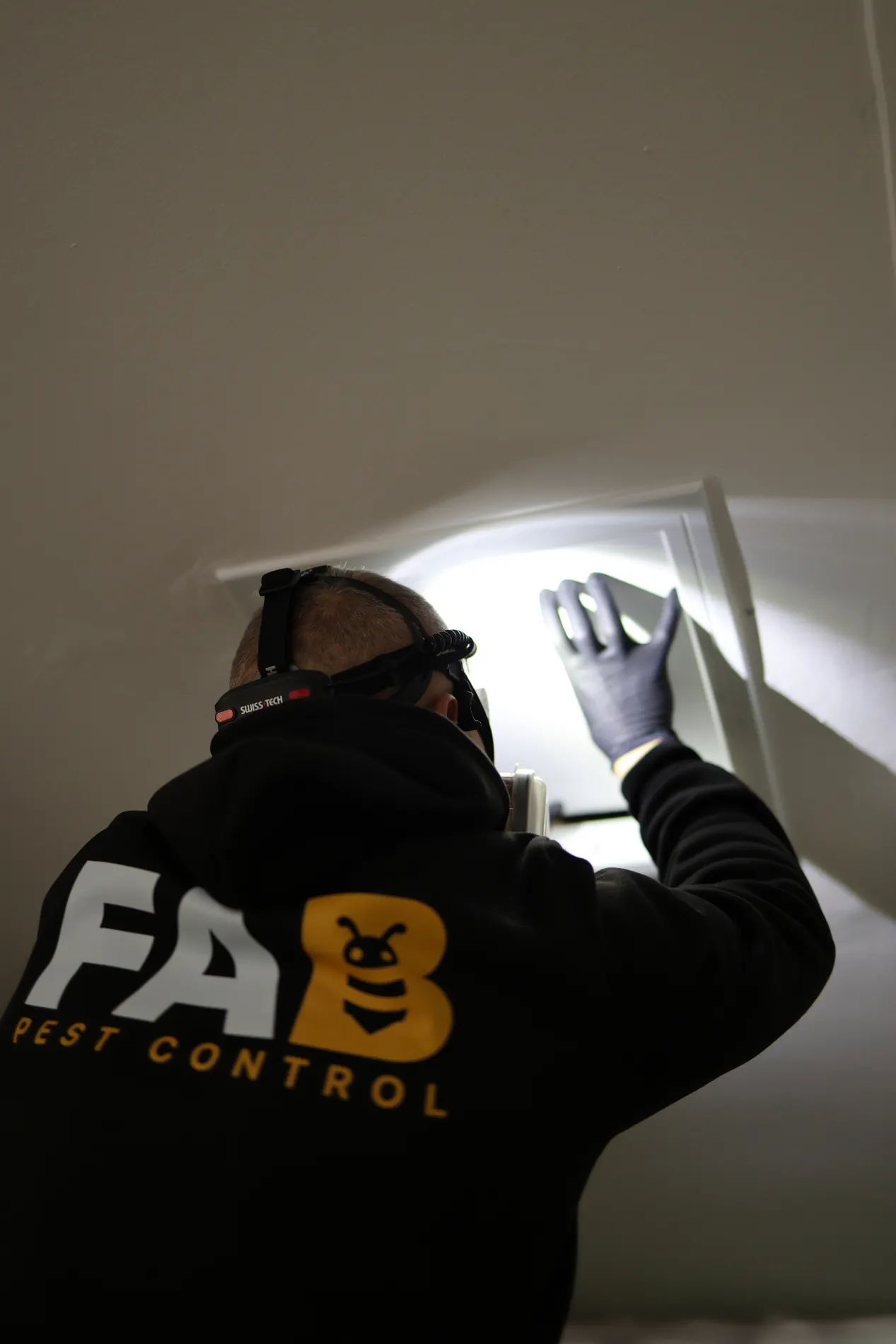
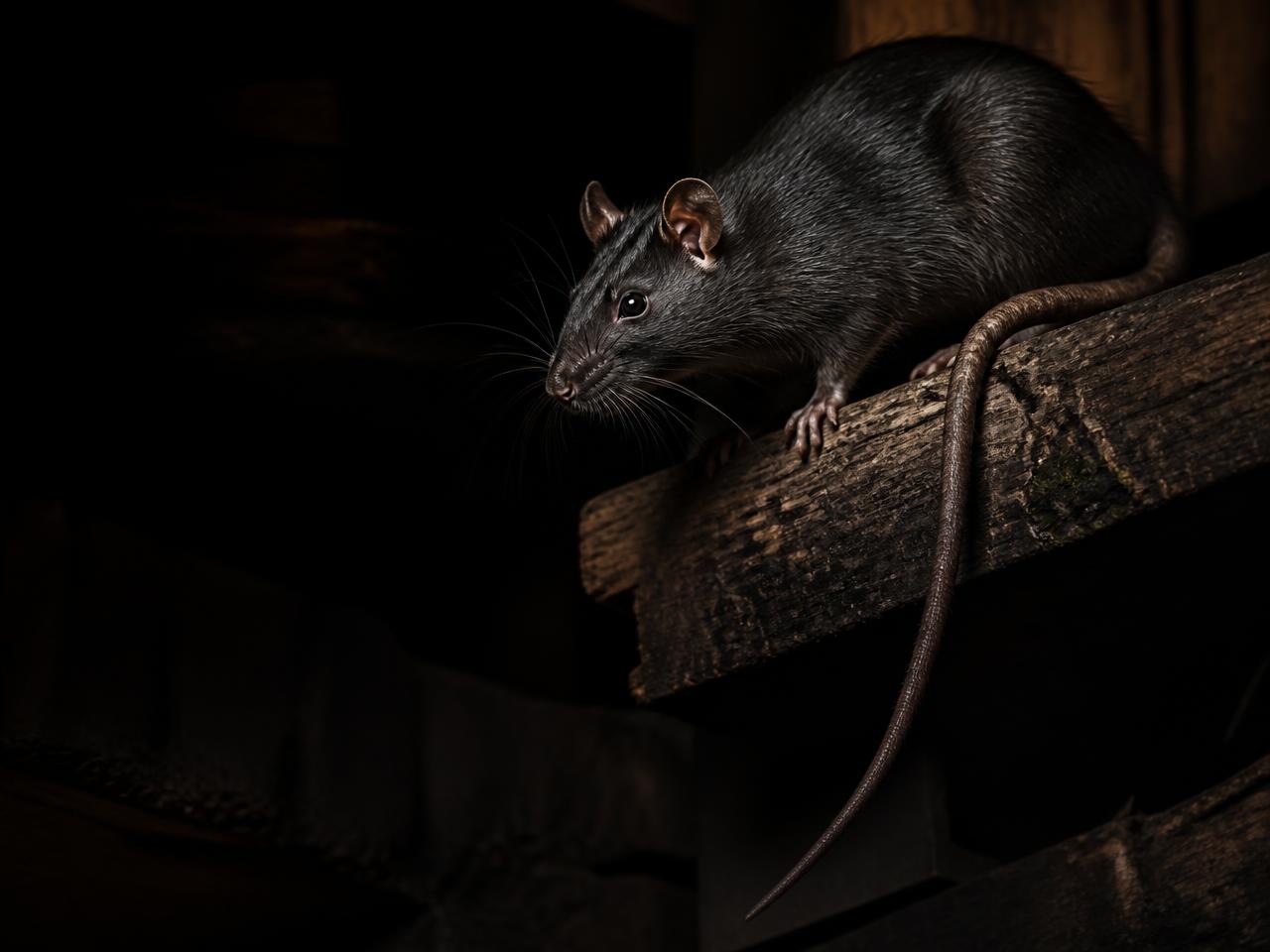
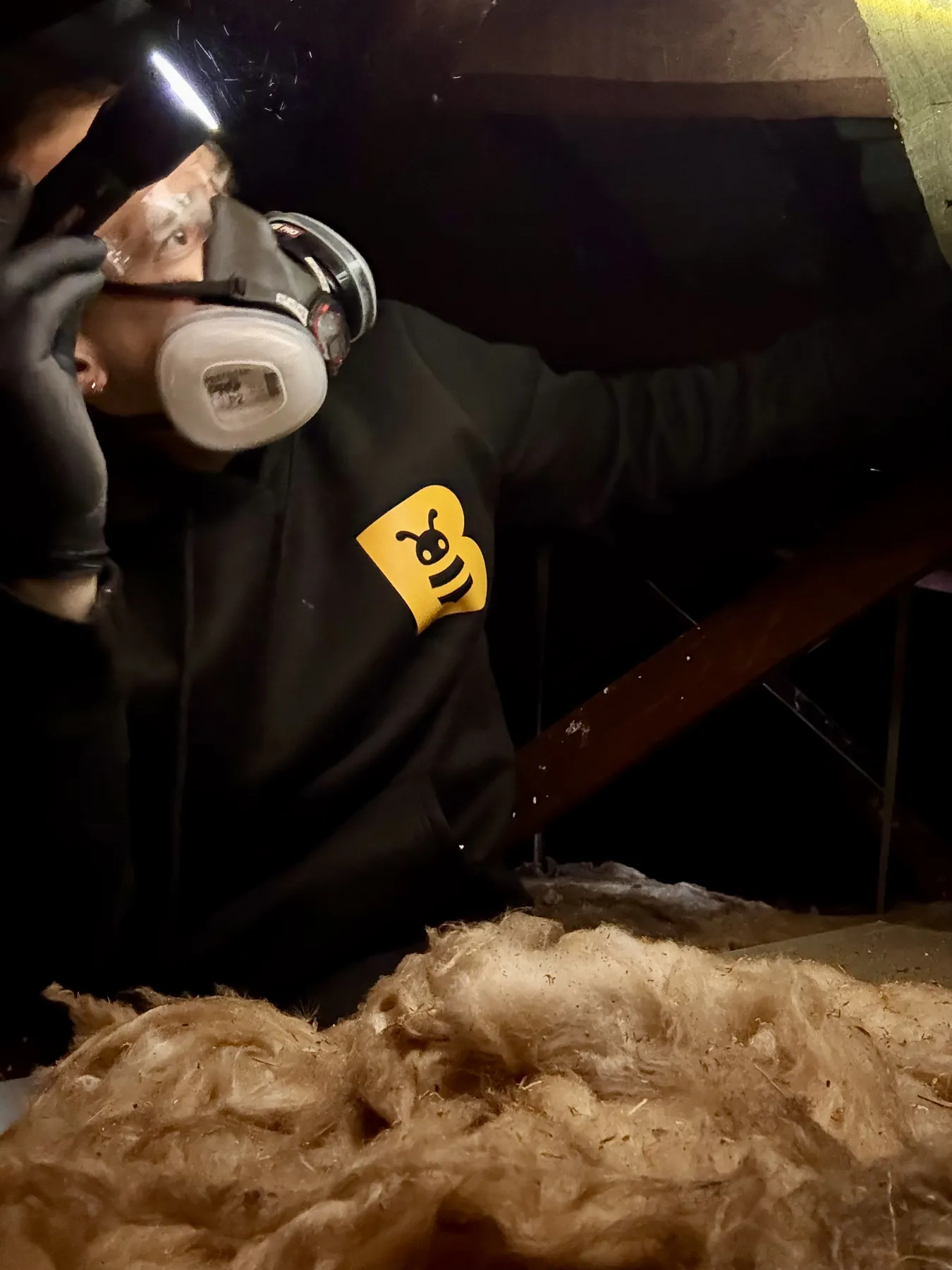
Rodents follow food, shelter and easy access. What you notice — a sound overhead, droppings in a cupboard — is usually the visible part of a larger picture that includes entry points and harbourage areas you can't see. Roof rats are commonly associated with ceiling voids, wall cavities and stored items in Perth homes, and activity overhead often points to an accessible entry along the roofline, eaves or a vent.
Placing a bait block in a cupboard can knock down a single visitor, but it doesn't address the gap they came through or the conditions supporting them. Left untreated, activity can also damage insulation, wiring and stored belongings. That's why the right approach depends on the layout, the extent of activity and how rodents are getting in.
Signs there may be rodents on the property
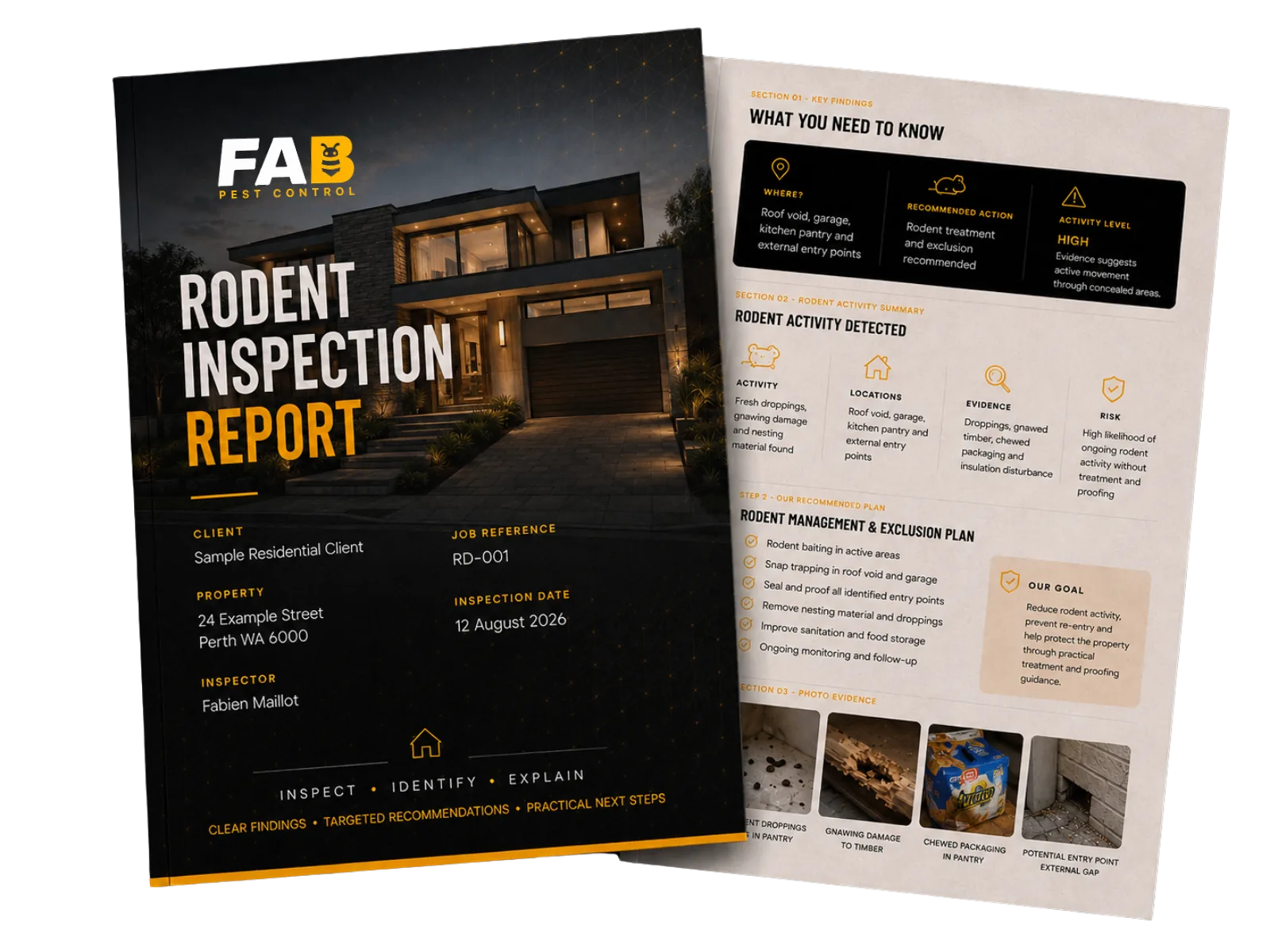
- ◆Scratching or scurrying noises in the roof, walls or sub-floor.
- ◆Droppings in cupboards, pantries or along wall edges.
- ◆Gnaw marks on packaging, timber, wiring or plastics.
- ◆Chewed food packets or an unexplained pet-food shortage.
- ◆A musty or ammonia-like smell in enclosed spaces.
- ◆Sightings of a rat or mouse, especially near dusk or after dark.
Conditions that keep activity going
- ◆Unsealed entry points along eaves and rooflines
- ◆Gaps around plumbing, cable and vent penetrations
- ◆Sub-floor access and disturbed ventilation covers
- ◆Pet food, bird seed or compost left accessible
- ◆Overhanging vegetation and dense garden edges
- ◆Untreated harbourage in sheds and storage areas
Preparing for your rodent service
Preparation depends on access requirements. Where possible, please ensure the ceiling manhole and any sub-floor access points are reachable and clear on the day. If you've been using DIY bait or traps, let FAB know so the findings can be interpreted accurately.
If activity keeps returning, request rodent control and we'll explain what we find.